Picture this: you're photographing an event, there's a roster of public speakers addressing a crowd. It may feel insignificant today, but there's every chance that a person addressing a crowd today becomes more significant than we know in the years to come.
After all, today's generation often look back fondly on people who were pioneers of past social struggles. Future generations will look back fondly on today's pioneers.
Hence getting good photos of the speakers at such events is not only important, but is also potentially history making - depending on where that person ultimately ends up.
Here's some pointers on how to get those shots, every time. These tips can also be used to nail the shots of chant leaders, megaphone users, and the like as well - basically of anybody who's addressing a crowd in any way.
Gear you'll need
Here's the basic equipment that you'll need. The rest of it relies on positioning, which we'll get to in a minute.
- A camera with burst mode functionality
- A fast, long/telephoto lens (i.e. an f2.8 70-200)
- A wide angle lens.
- Optional: a camera flash.
Where to position yourself
For getting shots of the speakers at an event, you'll want to position yourself pretty much in front of the stage, of the person speaking and be allowed to have maneuverability, without any major obstructions. If you follow the guide to documenting protests, this generally won't be an issue in most cases.
That's not to say that you can't position yourself behind people who are stationary either - as photos showing an essence of a crowd or people listening can be powerful as well.
For chant leaders, megaphone users and the like - you have far more freedom to move around.
The stage shots
These are your shots of people speaking from a stage platform, and can be grouped into the speaker portrait, the speaker hero shot and the side-behind shot.
Some people who give public speeches will mostly read off a phone screen or a piece of paper without looking up while others will address the crowd off the cuff and give a wide variety of physical expressions. Shots of the speaker giving arm and hand gestures while looking towards their audience will always produce the most powerful and interesting imagery.
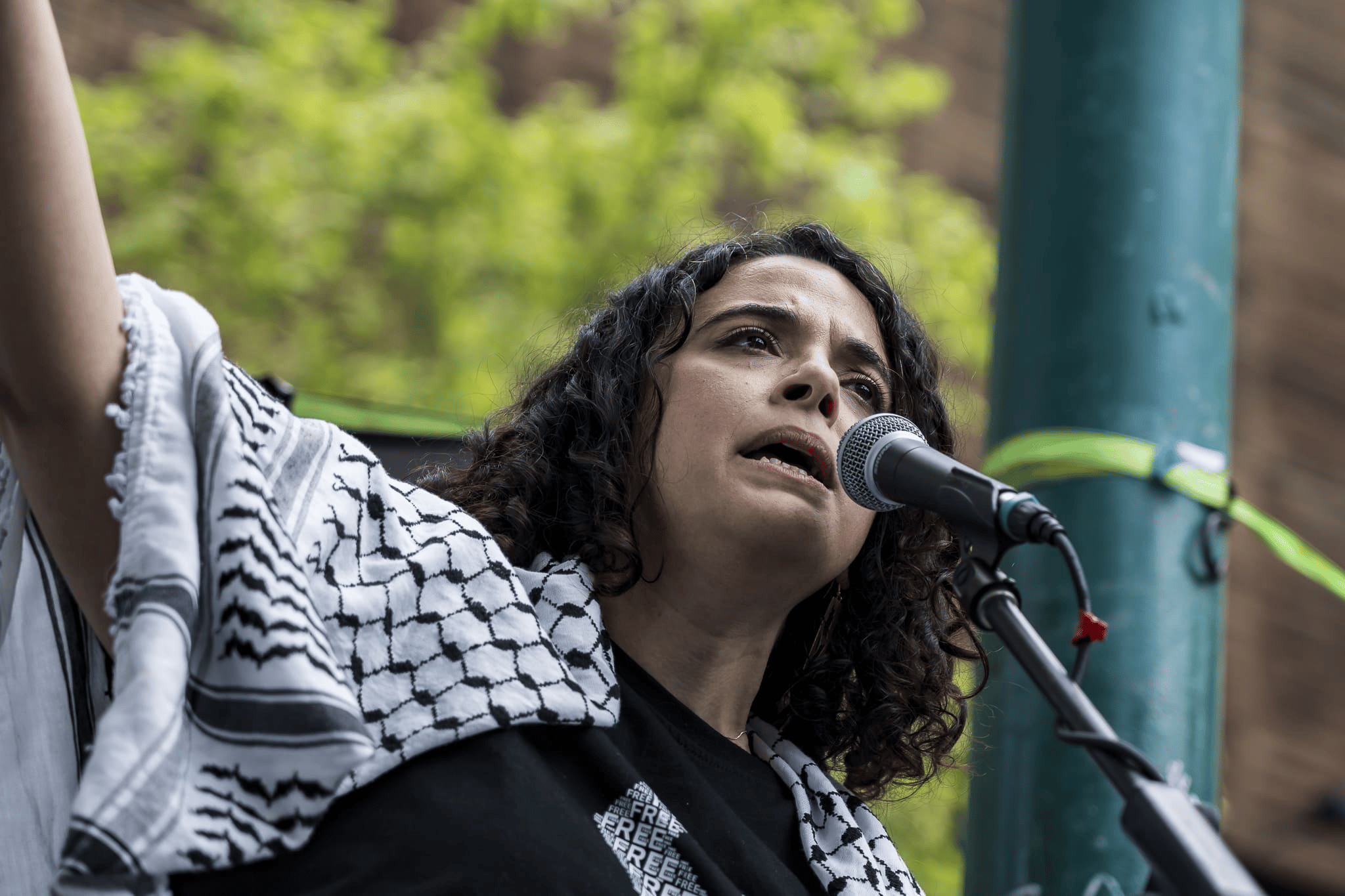
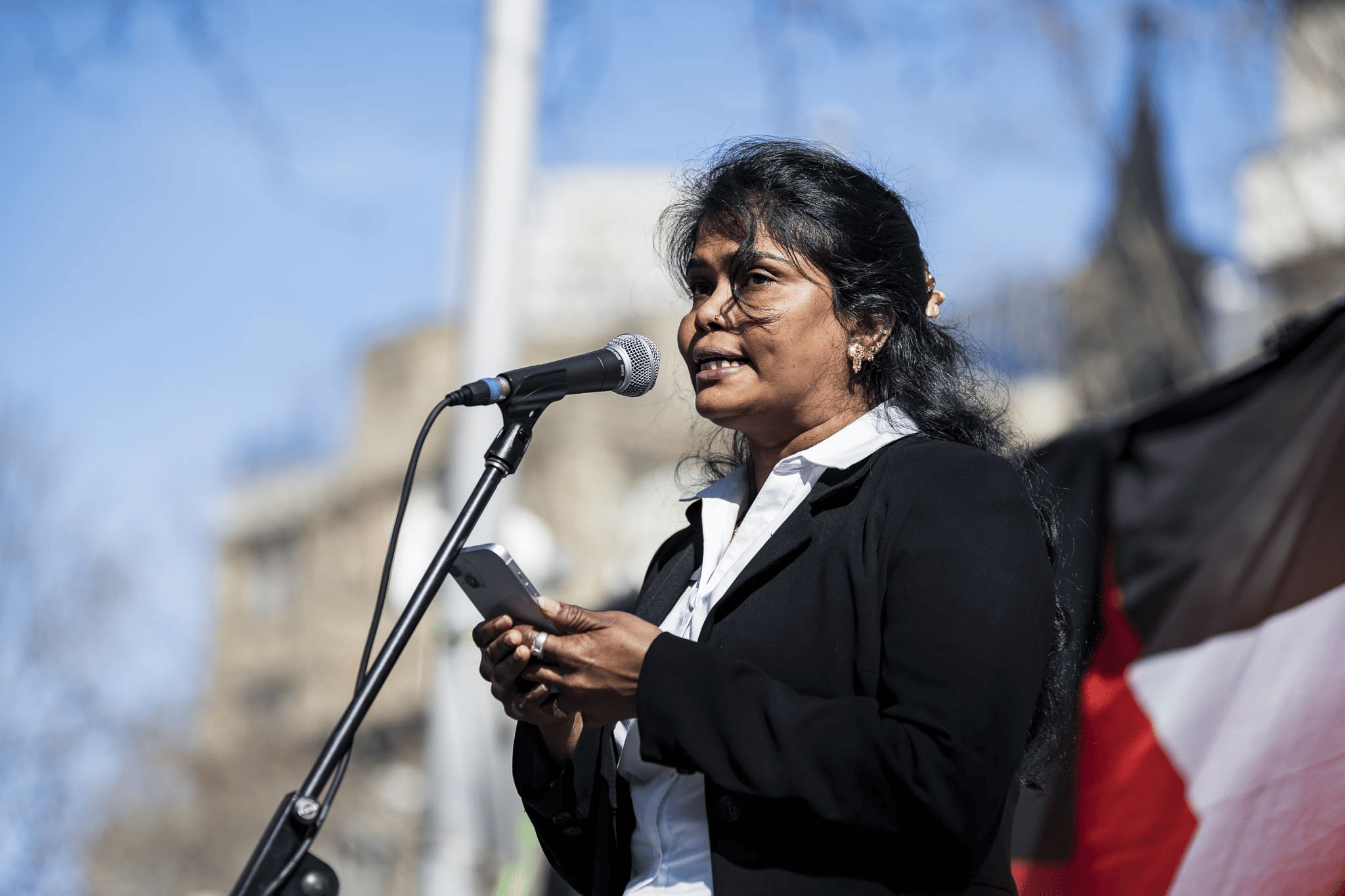
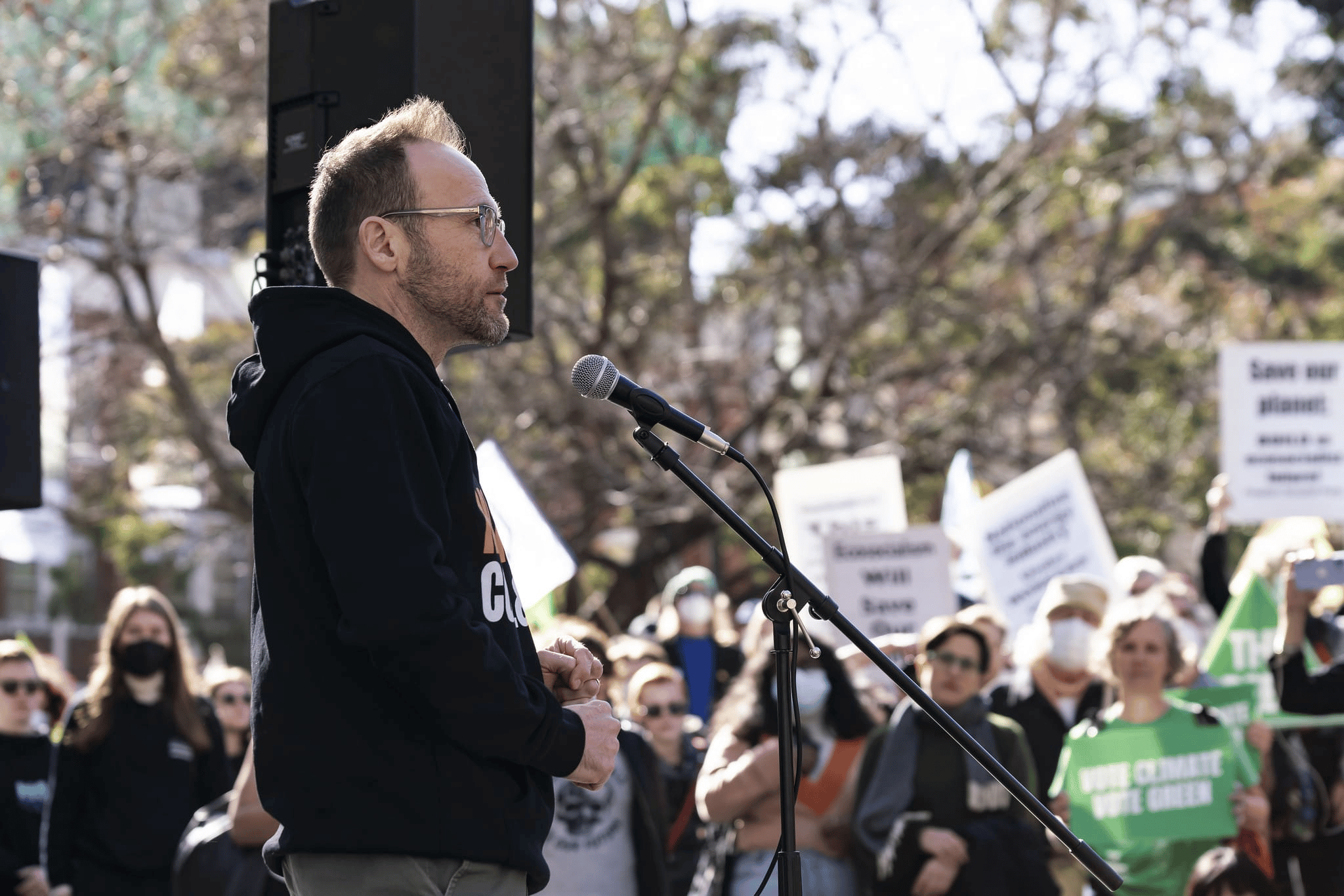
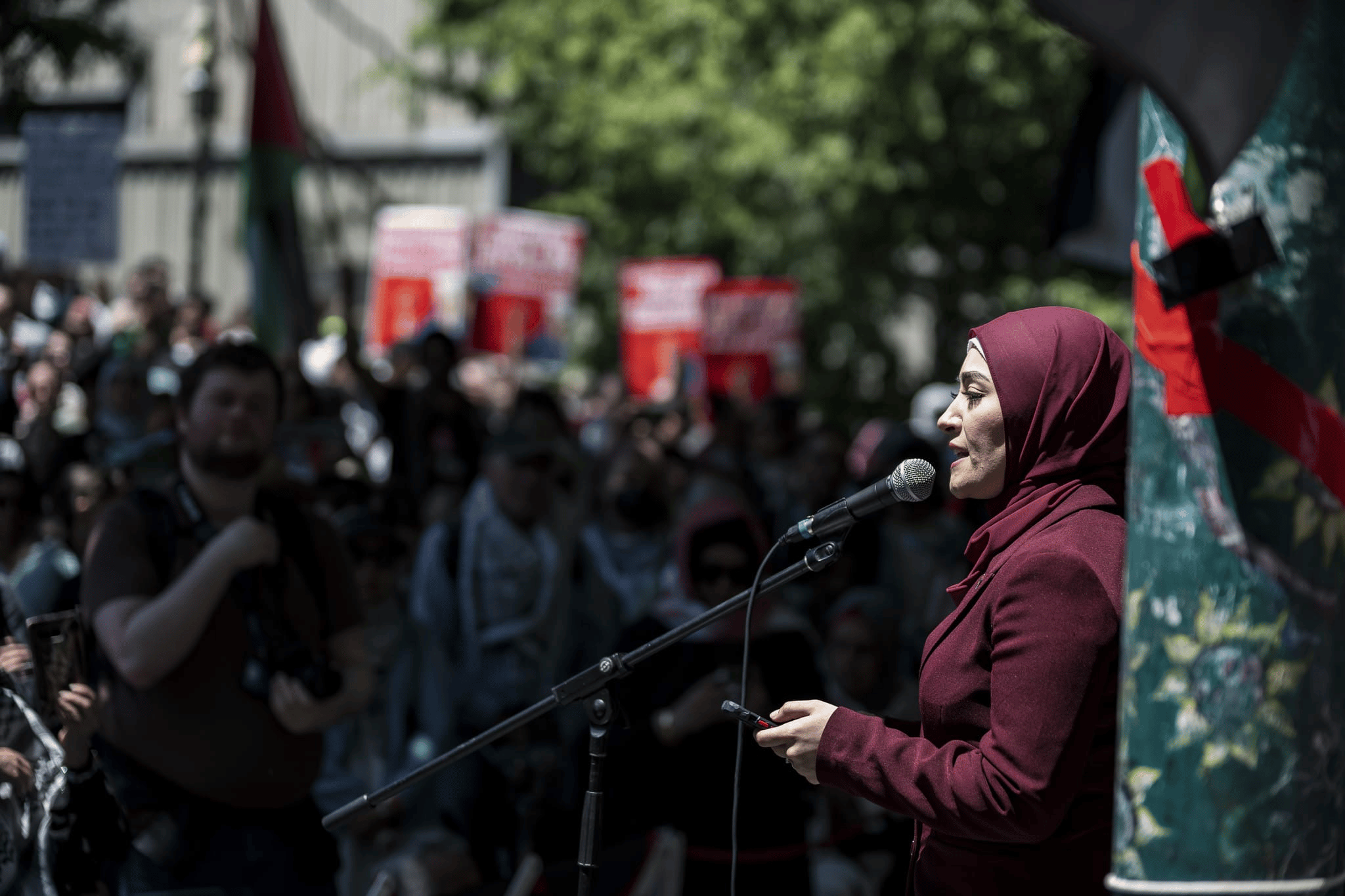
The photos seen below represent speakers at both ends of these extremes. The first image is someone who's expressive and confident - speaks off the cuff and is very physically expressive, the other is a more nervous public speaker who's staying mostly still and reading off their phone.
Even with less expressive and more nervous speakers, it's still possible to get strong photos as such people will still for the most part look up towards their audience occasionally - even if they're reading off a phone screen. This is where you'd use your camera's burst mode feature and hold the shutter button down for a few seconds to ensure you capture such a moment.
You'll end up with a couple dozen images that won't be useful, but chances are you'll get a couple that are good (perhaps even to the surprise of the person speaking!)
The speaker portrait
This is your basic shot of a subject addressing a crowd at an event. This shot focuses on the speaker's face and their passion and emotions that they're displaying; while still capturing context of where they're at and why they're there. You'll want to use a long focal length lens in these shots to really emphasise the subject.
The key here is that the person's eyes and facial features, are visible and aren't obscured by the microphone stand or the microphone itself. The eyes are everything. When we look at photos of any person, the eyes are always the focal point.
If the eyes are obscured, we lose focus. Hence the eyes should always be visible (or at least inferred to be visible - it's generally OK if the subject is wearing sunglasses for example) and in focus.
We also connect with people through their facial expressions and other subtle means; hence it stands to reason that a powerful portrait of a public speaker will show their facial expressions, features and emotions that they're displaying in that moment.
The speaker hero shot
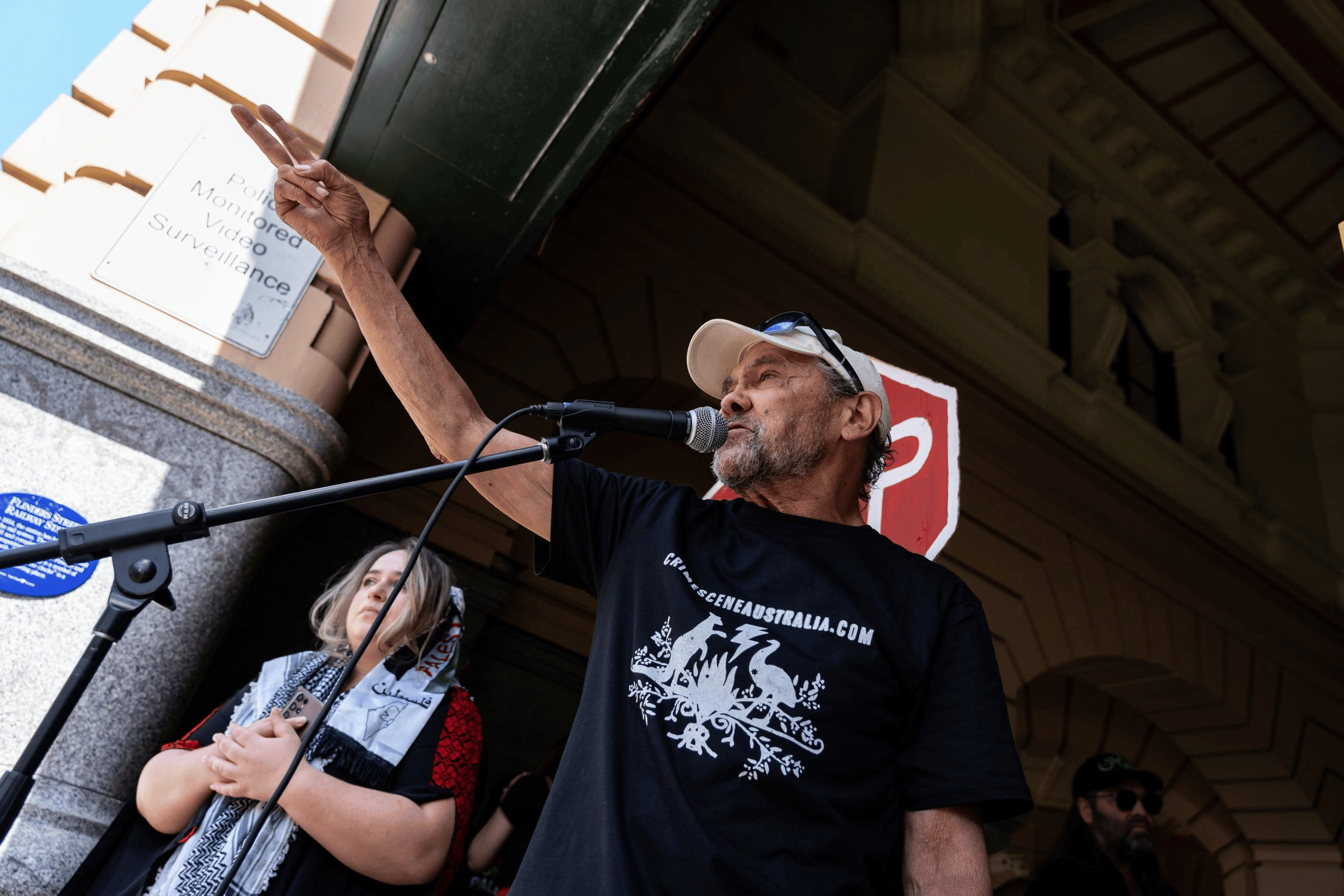
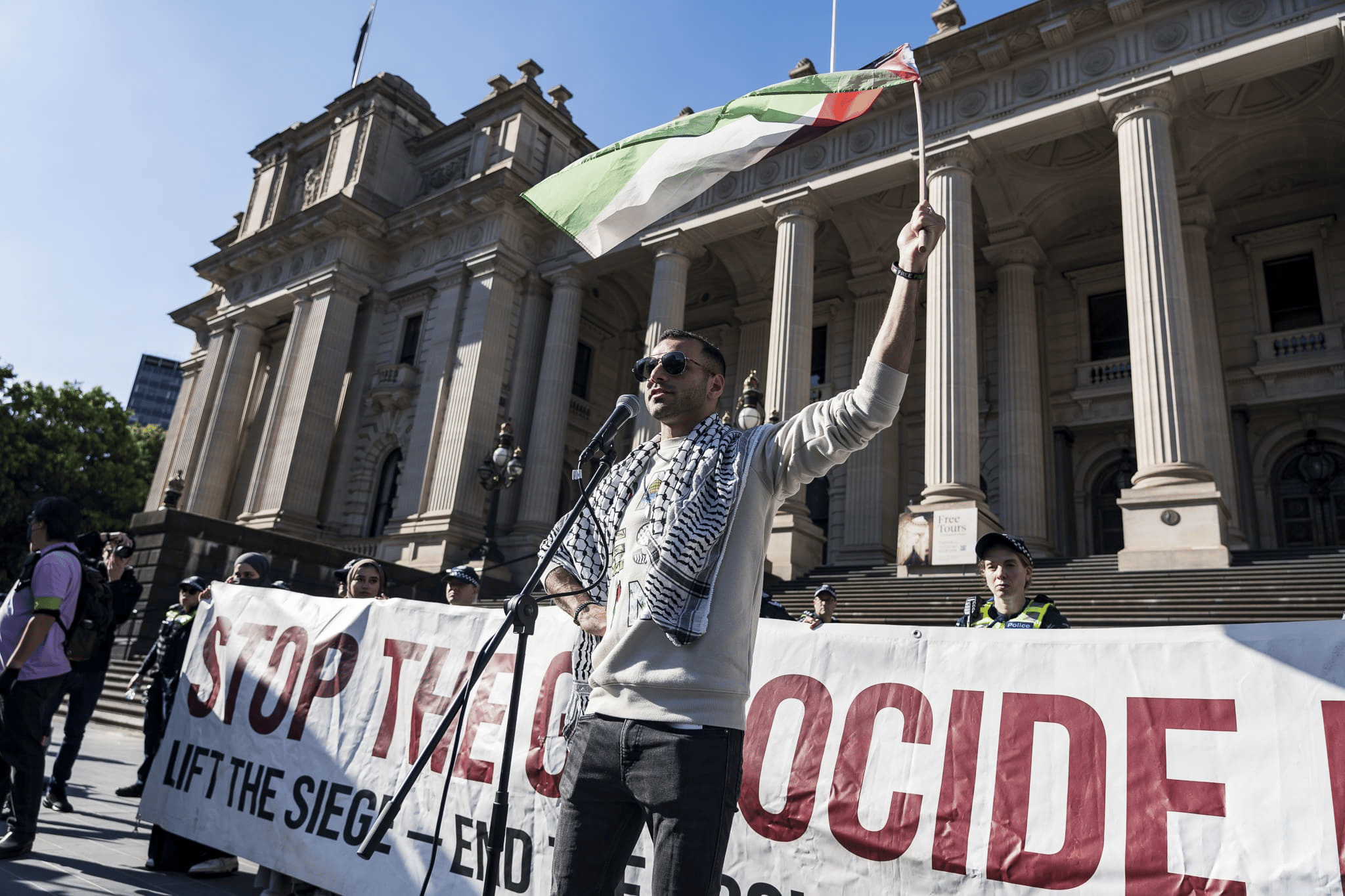
This is where you can really highlight a speaker's body and hand gestures, as well as taking advantage of the location, to create some powerful and dramatic imagery of a person giving a speech.
For these shots, you'll want to use a wide focal length lens and be positioned in close physical proximity to your subject. Much like with speaker portraits, you should position yourself in a way so that the subject's face isn't obscured. From front-side rather than directly front on.
Like with the speaker portrait - because hand and body gestures are often quick - you'll want to use your camera's burst mode function to ensure you don't miss the shot.
The side-behind shot
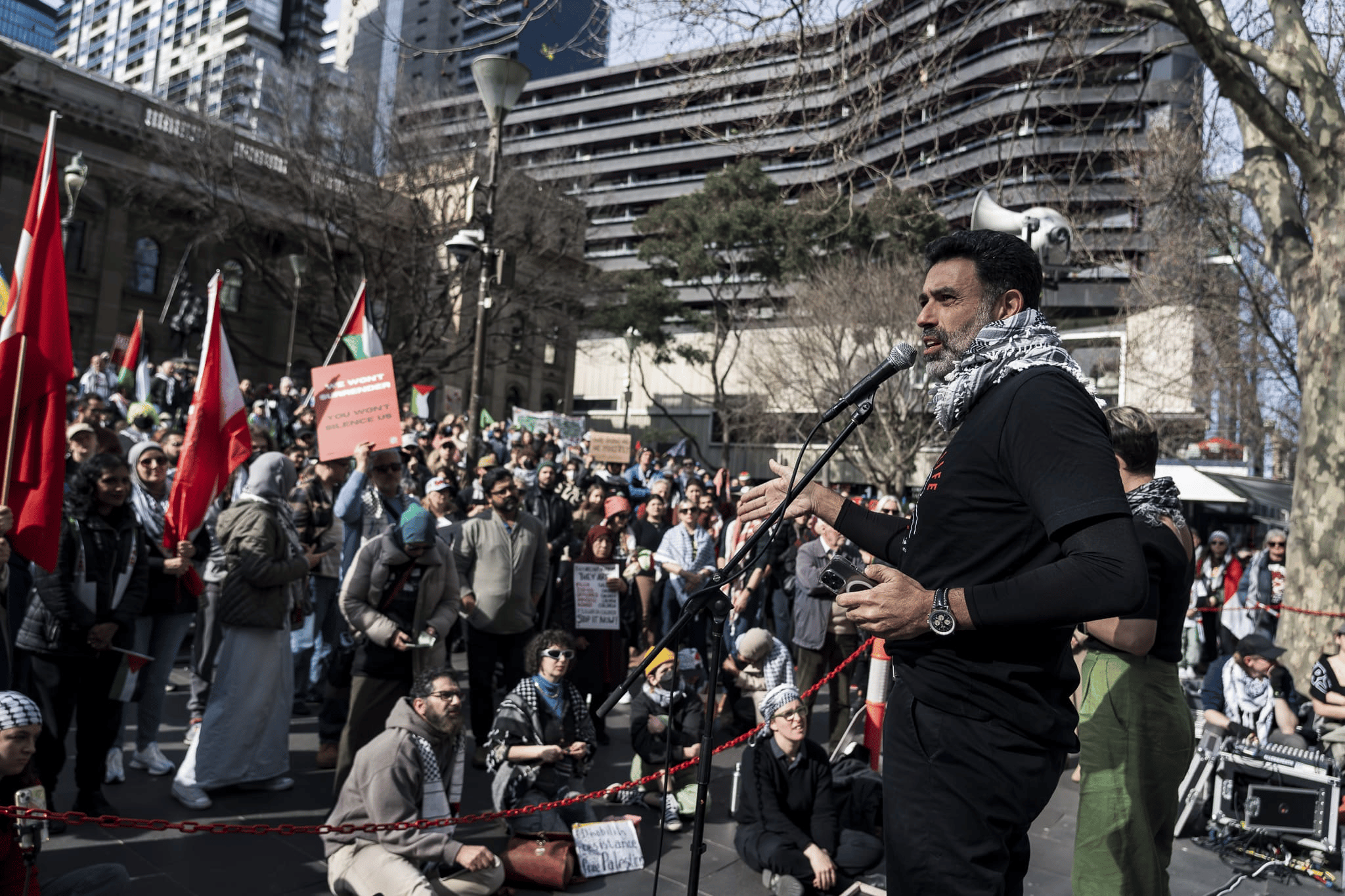
What I mean by the 'side-behind' shot is capturing the speaker with the crowd they're addressing positioned in the background; though images directly from behind a person speaking can also make for a powerful image depending on how physically expressive the person is. Bonus points if you can get the shot while the subject is looking in your direction.
For these shots, you can use a combination of a wide focal length or a long focal length, and combine this shot with the speaker portrait style or the hero shot style.
Of course, this shot might not always be possible depending on the nature of the speaker's platform or the nature of the speaker themselves.
The action shots
These shots concern people at rallies leading chants, using megaphones and the like outside of the main stage area (i.e. while on the march).
As these images fall under the purview of standard protest images, there's a lot more creative and technical liberty a photographer can employ here. You're also less restricted by the protest logistics and are able to move around more freely.
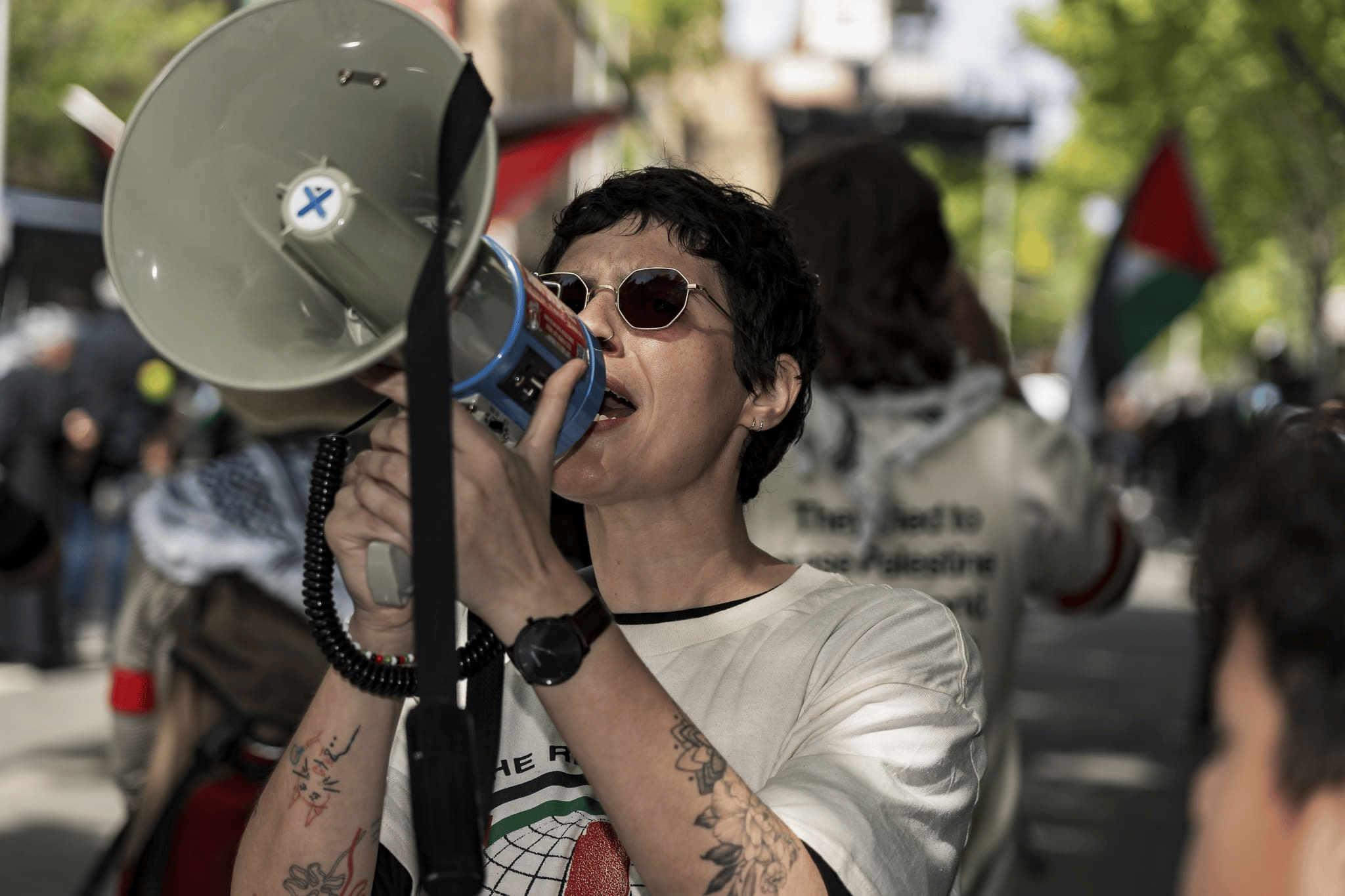
It's important to note once again that the subject's eyes are everything. This is true of any action close up photo but it's especially true when it comes to photos of people speaking to an audience - and megaphone usage, chant leading, etc all fall into that category.
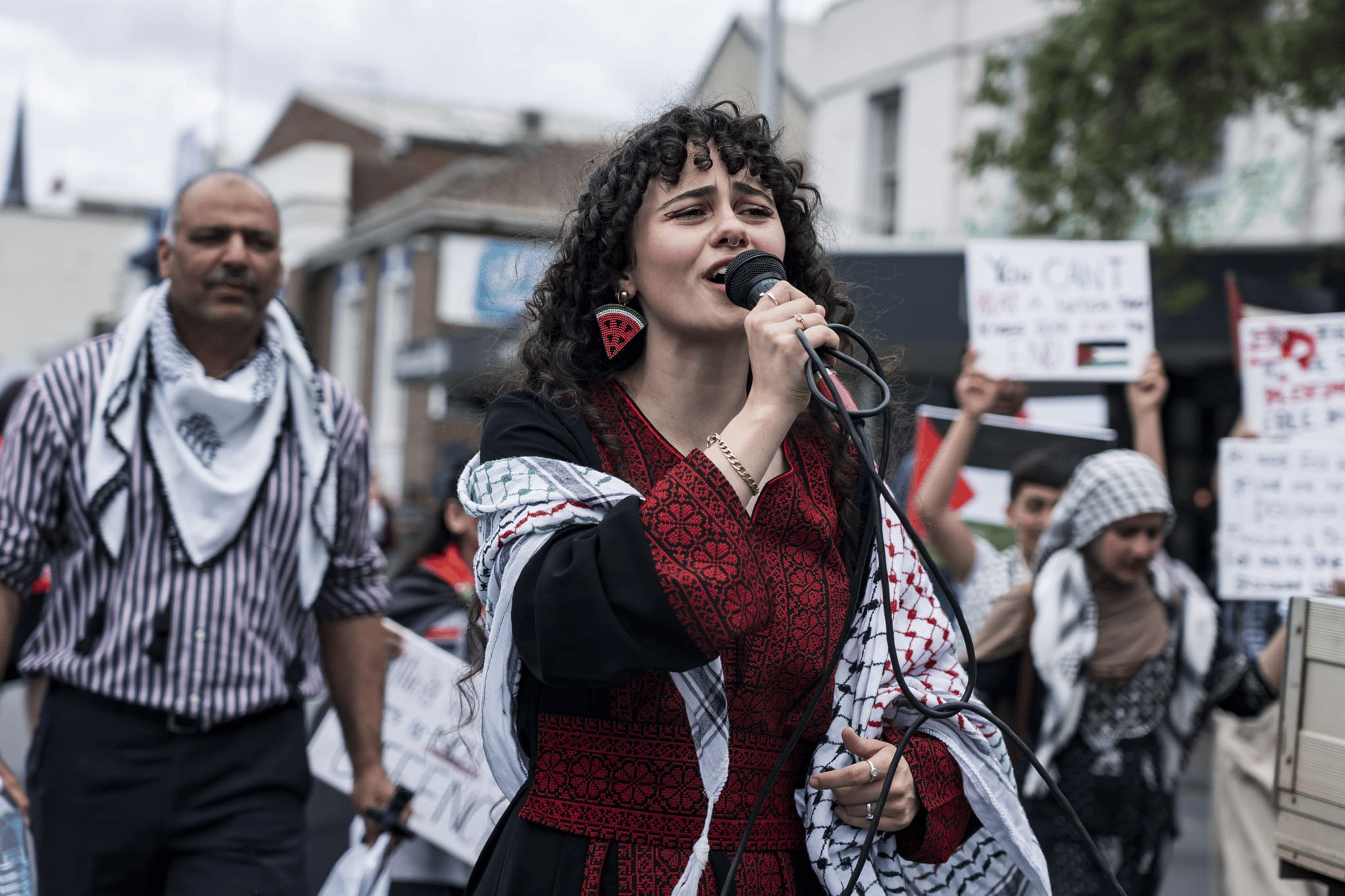
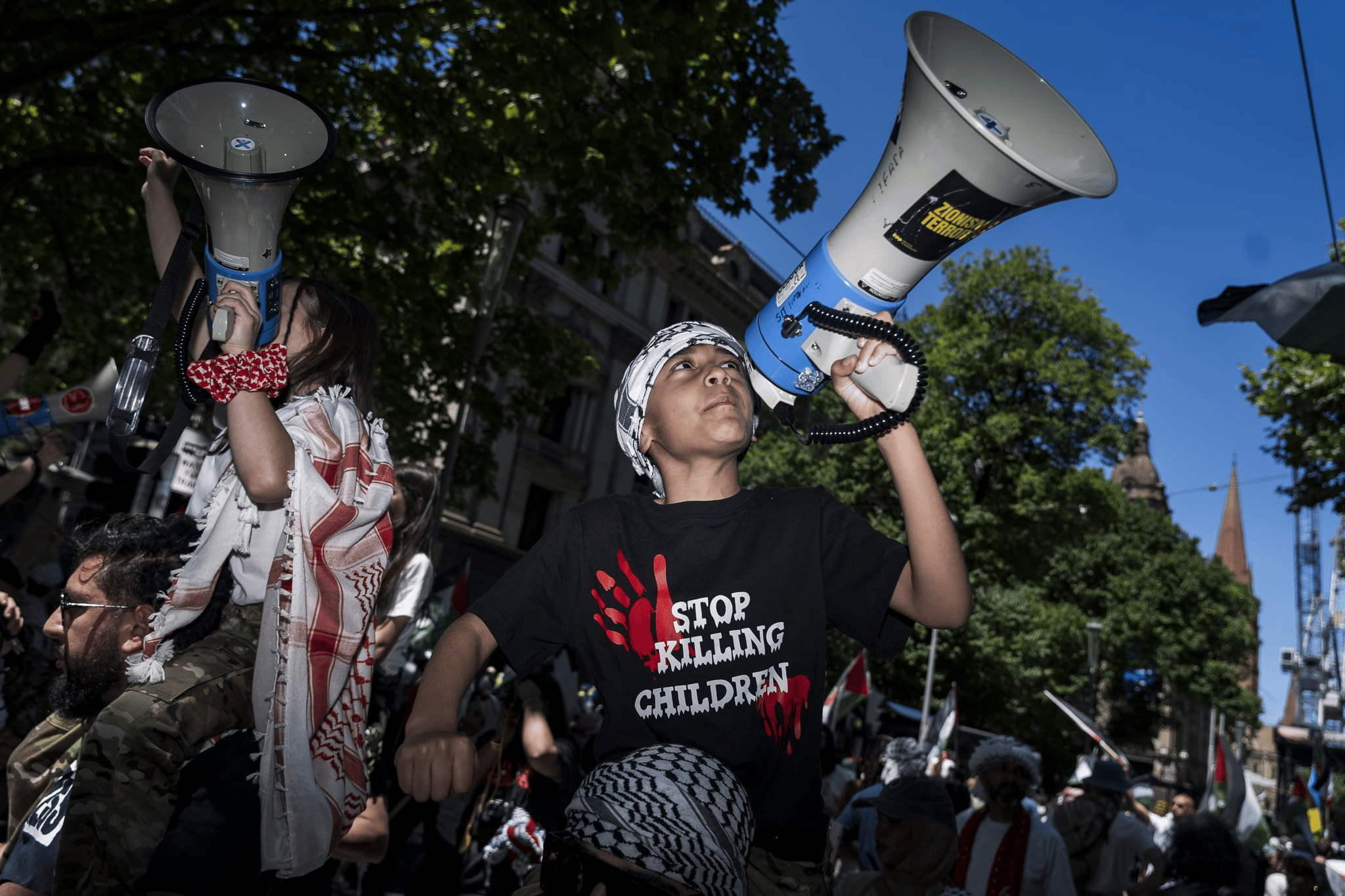
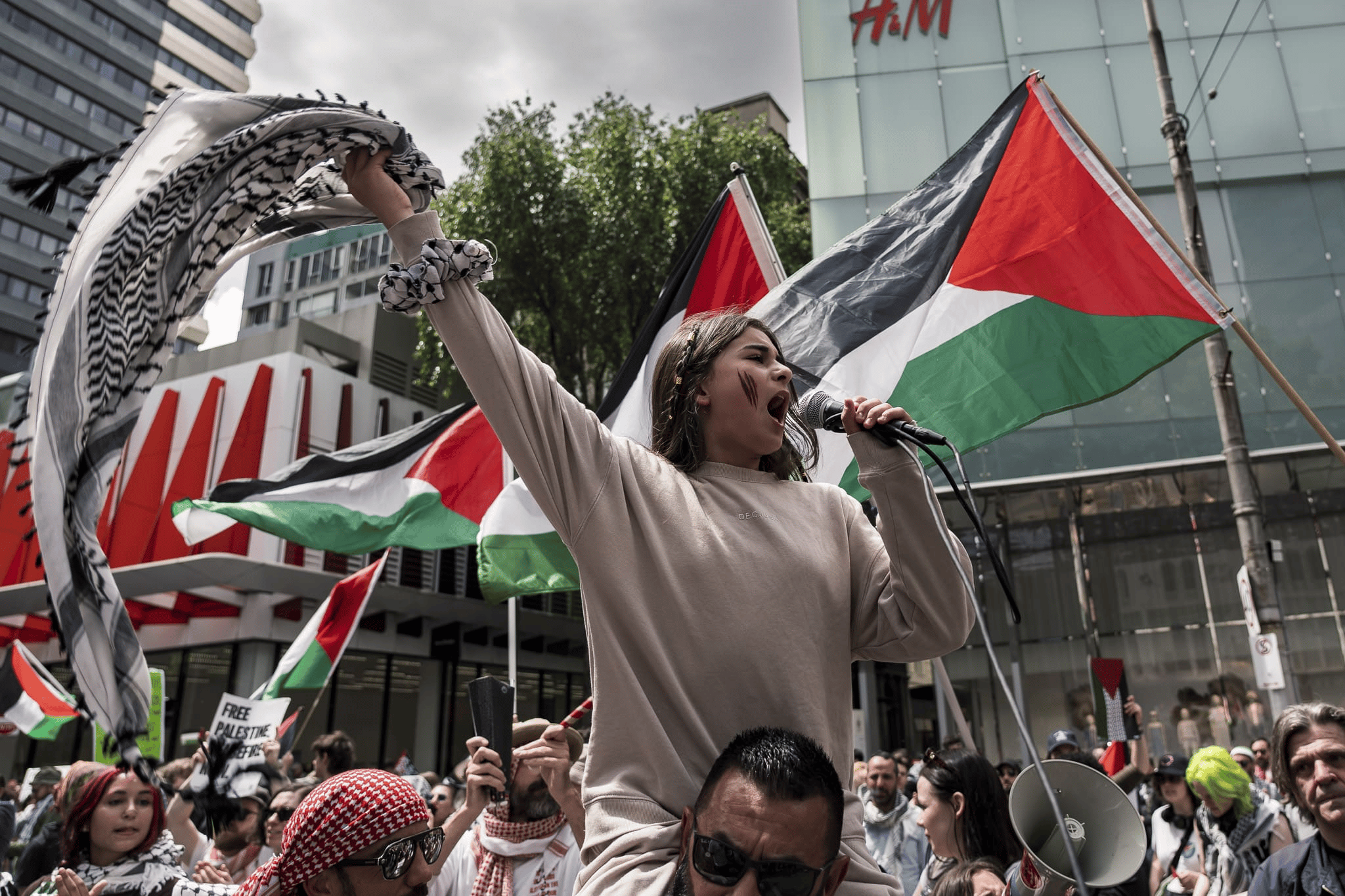
There are two types of basic shots that you can get here: I describe them as the candid close up and the dramatic close up (that can also double as the medium or hero shot).
The candid close up shot
This shot is essentially a speaker portrait albeit while on the move.
Like with the speaker portrait, you'll want to use a long/telephoto lens and shoot from a moderate distance. The idea being that the subject can't react or become 'showy' to you photographing them because they won't be overly conscious that you're doing so. Hence you get a more candid look.
When compared to speaker portraits, the range of expression - both body and face - are very likely to be wider. But the same rule still applies: aim for natural looking shots. You can make good use of the burst mode function and cull later in post.
The dramatic close up shot
This is essentially a hero shot and like with the speaker hero shot, with these shots you're going to be getting in close physical proximity to your subject, and using a wide angle lens.
Unlike with candid shots, because you're in close physical proximity pointing a camera at them - the subject will very likely react to you in at least subtle ways. Some people, however, will become more obviously showy, others will become camera shy. So the key here is to get in, get the shot, and get out as quickly as possible.
Dramatic close ups can often benefit from the use of a camera flash (in high speed sync mode) as well; which - aside from the subject likely being more prepared for a bright flash of light in their faces - can create contrast between the subject and their surroundings, as well as emphasise the dramatic aspect of the image.
Other considerations to take into account
Here are some other technical and logistical considerations you should take into account when it comes to getting that perfect shot of a speaker:
- Remember: the face, and particularly the eyes, are everything. Position yourself to the front-side of the speaker's position where you're not going to get any obstructions. For example, if you shoot the subject directly front on, chances are, the microphone stand, microphone or megaphone will be obscuring most of the subject's face. This you don't want.
- Reiterating the point: the eyes, in particular, are everything. When we look at photos of people, our eyes immediately go to the subject's eyes and then work their way around the image from there. If anything else, the subject's eyes should be in clear focus (use eye auto focus on your camera, if it has this as a feature).
- Aim for photos of natural looking facial expressions and poses. The one disadvantage of highly expressive public speakers is that it tends to be too easy to get shots of them where they're looking to give harsh, ugly or weird expressions. Avoid that, and take advantage of your camera's burst mode function to ensure you get more natural looking images. Images of public speakers where their mouths are either closed or softly open tend to look best. Photos of people smiling also work really well.
- Aim for positions where you're going to get good lighting. In sunny conditions, for speaker portraits, this means positioning yourself so that the sun is behind you and shining on the subject. In overcast conditions, this is less of an issue due to the softer natural light. You want contrast between the subject, and their background.
- For stage shots: from below eye height. Most of the time, when taking photos of people giving speeches, I crouch down so that I'm shooting up at the person. This gives a bit more of a dramatic look and gives the speaker a greater sense of authority. Action shots can be taken from above, at, or below eye level to great effect.
- Aim for contrast between your subject and background. Your subject should be brighter than their background, particularly in brightly lit sunny conditions. Adjust your camera settings down to what you'd consider the background to be properly exposed; then go a step or two down from that (don't worry if the subject is slightly underexposed in doing this, you can amend this in post).
- For stage photos, avoid using a camera flash unless you really need it. For people on stage speaking, a camera flash can be distracting. If you can achieve these things in natural light, then do that.
That pretty much concludes this post. Is there something I missed? Let me know by leaving a comment.
0 Comments